Noelle Swan

Author Archive

Digging Deep into the Chesapeake: UD Researchers Seek Clues to Curing Annual Dead Zone

In Marine Ecology, Wildlife and Ecology on June 4, 2012 at 5:50 pm

This article was first published by DFM News on June 4, 2012 under the title UD researcher seeks clues to curing annual Chesapeake Bay dead zone.
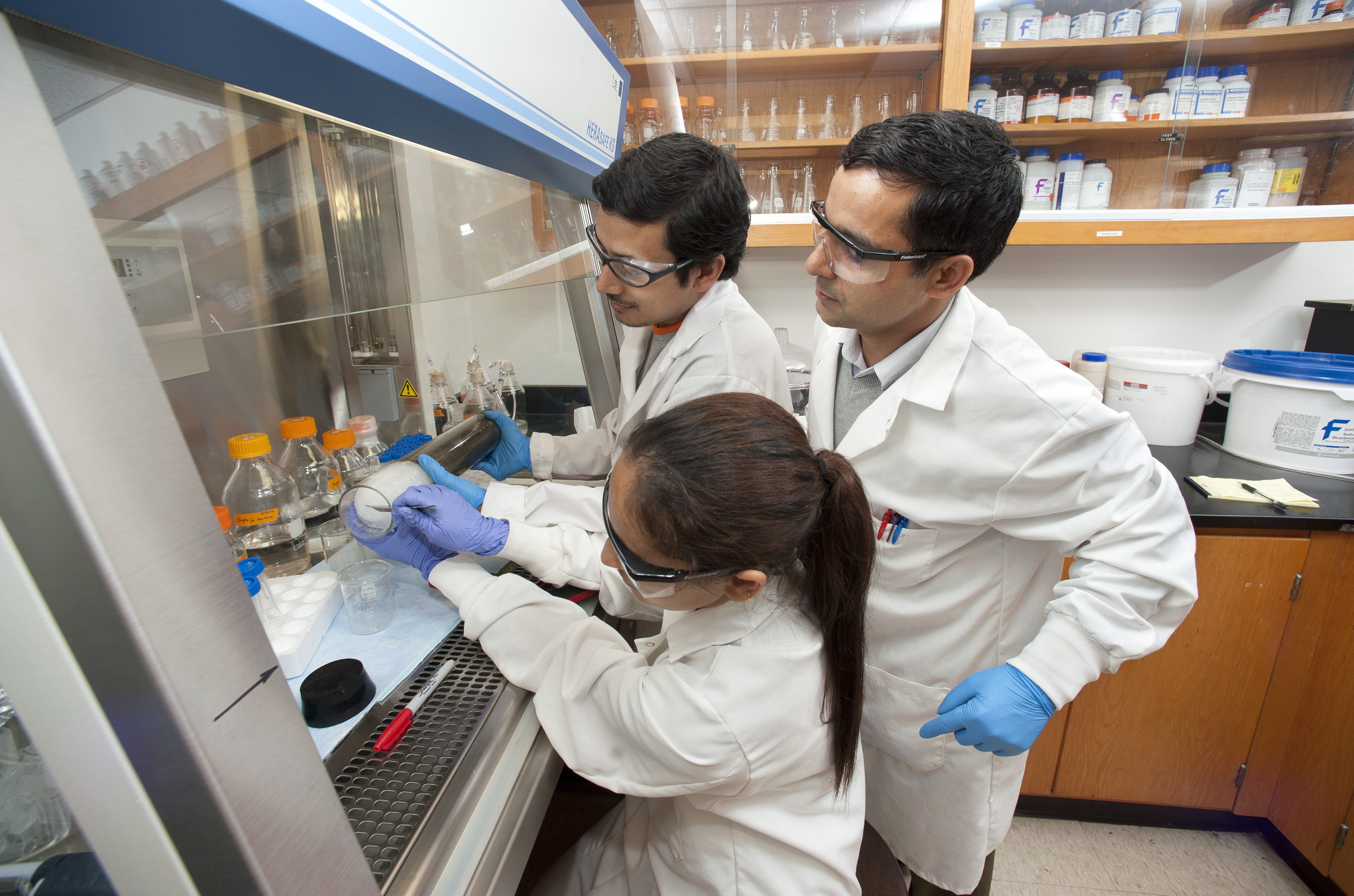
Dr. Deb Jaisi, Plant & Soil Science does work on sediment at the bottom of the Chesapeake Bay with the help of graduate students Sunendra Joshi (male) and Kiran Upreti (female). Photo courtesy: University of Delaware/Kathy F. Atkinson

Each summer in Chesapeake Bay, huge algal blooms, fueled by nutrient pollutants, blossom and die. Their remains sink to the bottom and are quickly devoured by bacteria that monopolize the Bay’s stores of dissolved oxygen, stressing or suffocating entire communities of marine life, such as clams, oysters and sponges.

“Restoration efforts in recent decades have helped improved water quality and ecological conditions in the Chesapeake Bay. However, the extent and severity of [the dead zone] has not improved as expected,” said Deb Jaisi associate professor of plant and soil science at the University of Delaware.

This past summer, in 2011, the Chesapeake received its worst report card yet from EcoCheck, a partnership between NOAA and the University of Maryland Center for Environmental Science, despite concerted efforts to reduce the amount of nutrients released into the bay through human activities.

The U.S. Environmental Protection Agency has named phosphorous as one of two major nutrient pollutants (along with nitrogen) contributing to the annual “dead zone.” Phosphorous is an essential element for life. It is found in every cell in the human body and nearly every food we eat. Humans, plants, and animals consume and excrete it. However, as with many things, too much phosphorous can be deadly.

Jaisi believes that a hidden record of phosphorous concentrations lies buried in the Bay floor. By decoding that record, he hopes to learn how concentrations have changed over time, and potentially pinpoint when and how a nutrient found in the bay for centuries became a pollutant capable of threatening the health of the entire bay.

Oak Ridge Associated Universities, a consortium of PhD-granting institutions, and the University of Delaware have awarded matching grants to support this research.

Something of a molecular detective, Jaisi plans to examine sediment cores provided by oceanography professor and eminent scholar David Burdige of Old Dominion University for traces of excess phosphorous that have settled on the bay floor year after year. Each source of phosphorous, from various fertilizers, to sewage treatment discharges, has its own atomic structure, similar to a fingerprint.

This summer, Jaisi will be installing a thermo-chemical element analyzer to help identify these fingerprints. Assuming he can get his lab up and running by mid-summer, he hopes to have some answers by the end of the year.

*

The first signs of trouble — depleted dissolved oxygen in the depths of the bay — began to show in the 1930s. By the 1950’s the dead zone started making annual appearances and has grown larger with each passing summer.

Because the Chesapeake Bay watershed is 64,000 square miles — nearly the size of the country of Cambodia — the problems and solutions likely originate far beyond the bay shores.

While half of the phosphorous in the bay comes from terrestrial sources, the U.S. Geological Survey estimates that nearly 10,000 metric tons of phosphorous enters the Bay through the watershed each year. Sources can include excess fertilizers applied to farmland, discharges from sewage treatment plants, and leaching from septic systems. One third of Delaware lies in the Bay’s watershed, so its farms, sewage treatment plants and septic systems contribute to the problem.

While Pennsylvania, Maryland, Virginia, and the District of Columbia have been attempting to improve the health of the Bay for thirty years, the EPA widened the approach in 2010. It required other states in the Chesapeake Bay watershed to submit plans to curb nutrient pollution. Delaware, New York, and West Virginia each completed the second phase of planning this spring and are preparing to implement new anti-pollution measures.

For Delaware, “it’s not just about trying to improve the bay 100 miles away. It’s about trying to improve waterways in our own state.” said Delaware Department of Natural Resources and Environmental Control Secretary Collin O’Mara.

Because nutrients enter the bay from so many sources, O’Mara says that DNREC has had to enlist the help of local municipalities and industrial partners. “To achieve a healthy Chesapeake Bay is going to take the efforts of everyone from the local government to the county government, to the businesses and the farmers. We are going to have to work together so the bay can heal itself.”

O’Mara says the efforts will include upgrading wastewater treatment plants, improving storm water practices, and examining industrial sources of nutrient pollution.

However, 70 percent of Delaware’s nutrient runoff comes from agricultural activities, so individual farmers play a key role, says O’Mara. A cost-sharing program will encourage farmers to plant “cover crops” — ones that grow alongside desired crops and take up excess nutrients.

Doing more to reduce pollution in Chesapeake Bay will require significant financial investments, at a time when states are struggling to balance their budgets.

“The economic climate is tough, but efforts to clean up the Chesapeake Bay have been taking place for 20 to 30 years. We can’t delay implementation of additional pollution control measures because of costs,” said Nicholas DiPasquale, director of the Chesapeake Bay Program at the Environmental Protection Agency. “We must also consider the economic and non-economic benefits that will result from these efforts.”

Both DiPasquale and O’Mara point out that Delaware can expect some returns from these investments.

Improving storm water controls, using low-impact development techniques, and installing rain gardens will reduce flooding and the costs of responding to flood damage, says DiPasquale.

“If we’re able to improve the waterways to the point where more fish survive, it’s better for everyone,” said O’Mara.

Much of the seafood caught off the coasts of Delaware, Maryland, New Jersey, and the Carolinas started life in the waters of the Chesapeake. The success of Atlantic coastal fisheries—and the many livelihoods they support—depends directly on the health of the bay.

DiPasquale says he has started to see some success stories.

Numbers of striped bass, or rockfish, an important commercial and recreational sp that lives in the Chesapeake Bay and its tributaries dwindled in the 1980s, but since then the fish has recovered.

“We think we are starting to see the resilience of the bay restored,” said DiPasquale. “When you look at long term trends, you can see improvements in the health of the watershed, but we’re not there yet.”

Back in the Closet: “Gen Silent” Explores Challenges Facing Gay Seniors

In Civil Rights, Social Issues on June 1, 2012 at 6:03 pm

This article first was published by Spare Change News on June 1, 2012.

Photo courtesy of Stu Maddux Productions.

“Long ago we decided, to hell with hiding,” Sheri Barden told a small group gathered at the Fenway Community Health Center last month for a screening of the documentary film Gen Silent directed and produced by Stu Maddox.

The 78 year-old South End framer and her partner, Lois Johnson, have recently become public voices for LGBT elders, many of whom seem to have fallen silent.

When it comes time to seek assistive care, “they end up going back into the closet really hiding who they are and often times being very fearful of what would happen if someone found out,” says Scott French, program director for Services and Advocacy for Gay, Lesbian, Bisexual and Transgender Elders, or SAGE.

Gen Silent was first released at the Boston LGBT Film Festival in 2010 and has been screened across the country since in an effort to draw attention to issues facing LGBT elders. On Thursday June 14, the Cambridge GLBT Commission and Somerville-Cambridge Elder Services will be sponsoring a free screening at the Cambridge Public Library.

As Maddux lays out early on in his film, today’s LGBT seniors lived through the McCarthy era, when gays and other groups of Americans were blacklisted as Communists, coming of age at a time when being gay could be a ticket to a psychiatric facility. They saw the Stonewall riots of 1969 force gay rights onto the national stage for the first time. They survived the AIDS crisis of the 1980s and have seen six states legalize gay marriage.

In the 1960s, Barden and Johnson were active in the Daughters of Bilitis, the first American lesbian rights organization, and have been politically and socially active in the LGBT community ever since. They say their participation in the film was a natural progression for the work they have been doing to for the past 50 years.

However, they say that many who marched at their sides have retreated into the closet in their final years for fear of reprisal from hospital and nursing home staff.

In the film, they talk of their friend Bill, an openly gay man who became so fearful of being mistreated by nursing home staff for being gay that he cut himself off from all of his friends.

Later in a telephone interview, Barden elaborates on their relationship with Bill in decades past saying he had helped them find their house in the South End and had taken them under his wing.

“The funny thing is he was one of the founding members of a group called Prime Timers for older gay men” she said, still trying to wrap her head around the dramatic shift he had taken. “But when he had to go into the nursing home he got very fearful of people finding out and how he would be treated.”

Afraid of being found out, he refused visitors, letters, and phone calls from all of his friends and died alone, Barden says. “We didn’t even know he had died.”

Barden says that she suspects Bill’s fears were largely unfounded but adds that whether the threat is perceived or validated, such fears can become paralyzing.

Such threats can come in many forms, from whispers and verbal insults from other patients to neglect and physical abuse from caregivers. In states that have not legalized gay marriage, partners may be barred from visiting each other in the hospital and excluded from the decision making process.

French says that in his work at SAGE in New York, he comes across individuals who refuse to enter into assistive care for fear of losing contact with their partners.

Massachusetts was the first state to legalize gay marriage and partners are afforded visitation rights.

For Gen Silent, Maddux says in an interview that he chose to focus on individuals living in Massachusetts, in part to demonstrate that equality in policy does not necessarily translate to equality in practice.

When Maddux interviewed KrysAnne Hembrough, a male-to-female transgendered woman, she was already suffering from Stage IV lung cancer. Her family had stopped speaking to her when she underwent her gender transition after living more than 50 years as a man, she told the camera. Single and alone, she was managing but already fearing what would happen when she could no longer care for herself.

In the film, she tells the story of what happened the night her lung collapsed and she was rushed to the hospital. The 911 recording reveals the EMTs awkwardly asking each other about her genitalia. Frightened and alone, she wondered if they would be afraid to touch her.

The film also features Lawrence Johnson, who recalls watching his partner, Alexander (Alexander elected not use his last name publicly), a strong and confident man 20 years his senior, descend into fear as Parkinson’s disease claimed more and more of his faculties.

Johnson retired early and attempted to care for Alexander in their home. As therapists began to visit to assist with Alexander’s care, he demanded that Johnson make the home look “as straight as possible.”

As Alexander’s disease progressed, it became unsafe for him to stay at home with Johnson. After an incident in which the two nearly fell down the stairs, Johnson reluctantly brought Alexander to a nursing home.

Johnson says he noticed whispers right away and feared that Alexander was being abused. He spent months searching for a nursing home where he and Alexander could feel comfortable together, where he could kiss him hello and goodbye, rub lotion on his hands, or rest his head on his shoulder.

Creating a welcoming environment takes more than passing a law, says Lisa Krinsky, director of The LGBT Aging Project in Jamaica Plain. Founded in 2001, The LGBT Aging Project works with health care and assisted living providers to create more welcoming environments for LGBT seniors.

Krinsky spends time initially talking with the senior management at facilities throughout Massachusetts, pushing for an organization-wide commitment to acceptance of diversity.

Krinsky says many hospital administrators say they “would be” accepting of any LGBT individuals that sought them out for care. But she insists that it is the responsibility of the provider to open the door and convey that message.

With senior management on board, Krinsky leads workshops for employees. She offers them language to communicate with patients about their orientation.

She stresses that accepting diversity does not have to mean accepting values. Instead, she reminds participants that the responsibility of the caregiver is to provide compassionate and consistent care to patients regardless of their beliefs.

Creating a tolerant space takes work on the part of the caregivers to not only provide an equal standard of care for all patients but also to communicate to staff, patients, and visitors that tolerance and diversity are expected and accepted values of the program, Krinsky says.

While some organizations place a rainbow sticker in a conspicuous place as a symbol of tolerance, Krinsky challenges institutions to do more and cautions prospective patients, families, and friends that a sticker does not mean all staff and residents will be welcoming.

She urges families looking for accepting care for LGBT seniors, or care for seniors with LGBT family members and friends, to spend time visiting each facility in person and talking with staff and residents.

She recommends looking around the facility for other signs of diversity. Are there events posted on the bulletin board for LGBT groups? Is Bay Windows, a free Boston LGBT newspaper, available with other community bulletins? Are there welcoming statements posted?

Further, Krinsky advises families to ask directly if there are any LGBT residents already in the program and to speak with them directly.

NOELLE SWAN is a writer and editor at Spare Change News.

Black Women’s Health Study Aims To Improve the Lives of African American Women for Generations to Come

In Healthcare on June 1, 2012 at 10:50 am

This article first was published in the Spring 2012 edition of the Association for Women In Science Magazine.

In 1995, when Lynn Rosenberg, Sc.D., Julie Palmer, and Lucille Adams-Campbell, Ph.D. began the Black Women’s Health Study (BWHS), the medical and epidemiological community already widely understood that African American women disproportionately suffer from a variety of medical conditions. In addition to being more likely to die from breast cancer, black women are three times as likely to develop uterine fibroids, Rosenberg explained. Lupus, scarcoidosis, preterm birth, diabetes, hypertension, and obesity are all more prevalent in the African American community, added Palmer. However, no one has been able to definitively address why this is the case.

Black Women and Breast Cancer

While African American women develop breast cancer at a lower rate than their white counterparts, it has become the most commonly diagnosed cancer among black women, and they seem to die from it more than any other race does. What could be causing this deadly disparity?

Researchers for the BWHS at Boston University’s Sloan Epidemiology Center think they just might have unraveled the answer and with it, a potential solution. B.U. Epidemiology Professor Julie R. Palmer, Sc.D., is a co-principal investigator for the BWHS. Palmer has devoted the better part of the past 20 years to understanding the causes of breast cancer among African American women. She explains that breast cancer comes in two varieties, estrogen-receptor positive, ER+, and estrogen-receptor negative, ER-. While the former can be treated with hormonal therapy, the latter and more deadly type requires intensive chemotherapy. This more aggressive ER- breast cancer is twice as common in black women as it is in white women. “That’s part of the reason why black women are more likely to die from breast cancer,” Palmer explains. The question remains, why is this deadlier variation more common in black women?

Among the 59,000 African American women enrolled in the BWHS, 1800 breast cancers have been diagnosed so far. Of those 1800 cases, investigators have been able to confirm and examine some 350 ER- cases.

Knowing that reproductive factors play a major role in the incidence of ER+ breast cancer, Palmer wondered if there might be a similar correlation between ER- breast cancer and reproductive history. She examined the reproductive histories of the 350 ER- women as reported in various questionnaires. In addition to categorizing women in the study by type of breast cancer, she and her fellow researchers looked at the women’s age at their first pregnancies, number of births, and history of breastfeeding. Comparison of all this data showed that women who had more than two children had about a 50% higher risk of ER- breast cancer than women who did not have any babies. However, further analysis indicated that this increased risk for ER- breast cancer did not occur in women who breastfed their children (1).

This revelation could have enormous implications for the breast health of black women if born out to be true in follow-up studies. “Breastfeeding might be a really important factor that is modifiable and that could be used to prevent breast cancer,” says Palmer. Currently, breastfeeding rates tend to be lower among African American mothers, which could explain why they are disproportionately developing—and dying from—ER- breast cancers. If further research corroborates this hypothesis, then a simple behavioral shift could have a dramatic impact on the long- term health of thousands of black mothers.

This Potentially Groundbreaking Finding Begs the Question: Why Has It Taken Us So Long To Find This Out? “Thirty or forty years ago, all the studies were of men,” said Rosenberg. “After that, all of the studies were of white men and women.” She saw black women’s health as a frontier in health care, one that had been overlooked with dire consequences.

With such little data available about this population, Rosenberg, Palmer, and Adams-Campbell decided to create a longitudinal cohort study in order to explore as many diseases as possible. The medical community had a lot of catching up to do in understanding how to best treat women of color.

It would be impossible to consider a large-scale study focusing specifically on an African American population without taking into consideration the infamous Tuskegee syphilis experiment. From 1932-1972, the U.S. Public Health Service, in conjunction with the Tuskegee Institute in Tuskegee, Alabama, studied 600 African American sharecroppers. Some 400 participants had syphilis, and in an effort to understand the progression of the disease, researchers monitored their suffering for forty years without offering any diagnosis or treatment. Outrage over this study led to stricter ethical standards for medical studies.

Rosenberg said that designing the study required some careful thinking about Tuskegee. Plans for communication with the study participants were carefully laid out. African American women were solicited to serve on an advisory board, including a physician who had investigated the history of medical research among African Americans in this country. Soon afterwards, two participants joined the advisory board.

One study participant, Jo-Anna Rorie, also a professor and a researcher at Boston University, but in a different department of the Black Women’s Health Study, said that she had run into fears stemming from the Tuskegee syphilis experiment in her own research. “Tuskegee is embedded in the memory of all communities of color.” As a participant in this study, she said that she had been impressed by the level of communication between the researchers and the participants and considered the BWHS to be a model for how information should be disseminated. As an individual study subject, she has taken some of the information included in the BWHS quarterly newsletters to heart. When a BWHS newsletter arrived in her mailbox suggesting that a stressful neighborhood could contribute to health problems, she started thinking about moving.

Black Women and Hypertension, Diabetes

For a variety of reasons, many African American women, regardless of income, tend to live in racially segregated urban neighborhoods. “We found that there was an effect over and above people’s individual behaviors, and we hypothesized that it may be the stress of living in an area where there’s more danger [that contributes to health disparities],” Palmer said. Add in the all-too-common coupling of a lack of fresh produce and an excess of fast food found in many low-income neighborhoods, and you have a recipe for diabetes.

“This cohort tends to be a middle class cohort, but we still live in low-income, sort of fringy kinds of neighborhoods,” said Rorie. “And that, in and of itself, might be causing a certain amount of stress that causes our blood pressures to go up.” Rorie, a successful researcher and professor with two master’s degrees and a nearly complete Ph.D., lives in Dorchester, Massachusetts, a largely working-class neighborhood of Boston with a reputation of high crime rates. As a controlled hypertensive at risk for pre-diabetes, she wondered if a change of scenery might be the needed prescription.

Another BWHS researcher, Patricia Coogan, Sc.D., a senior epidemiologist at Sloan Epidemiology Center, recently published in Circulation, a journal of the American Heart Association, further evidence that Rorie’s decision to move might be the right one (2). In a study of a subset of the BWHS cohort (those living in Los Angeles), she analyzed air pollution data and found a correlation between the common traffic pollutant, nitrous oxide, and incidence of diabetes and hypertension in black women. “It is well documented that African Americans tend to live in more highly polluted areas, and the incidence of diabetes and hypertension is much higher, twice as high in African American women [than in] white women,” said Coogan. She has secured funding from the National Institute of Environmental Health Science to look at this in the entire BWHS cohort.

Women in Epidemiology

Over the course of her career, Rosenberg has watched the field of epidemiology evolve and push the boundaries. When she applied for the doctoral program at the Harvard School of Public Health (HSPH), most people accepted into the program were male, medical doctors. She became one of the first women and biostatisticians to earn a doctorate in epidemiology at HSPH. Ten years later, Julie Palmer graduated from the same program along with two other women in a class of nine. Palmer said that today, the breakdown is closer to 50 percent female.

While Palmer suspected that in much of the field the professional demands on women made raising a family difficult, she found the leadership at Sloan (including Rosenberg and two male directors) fostered an environment compatible with motherhood. “I was fortunate to work in this group. The culture of this place is that family comes first and that you work when you’re at work and you don’t when you’re with your family,” she says. “Yes I would put in a 40-hour week, but I had all the rest of the time for family.”

However, BWHS is not just about women. “One thing that we’ve tried to do in this study, in addition to studying African American women, is to mentor African American scientists. It’s a long process moving up in the sciences, and it requires a lot of mentoring.” Palmer said that they had taken six to eight doctoral students from Boston University and Harvard under their wings. In addition, they mentored two junior faculty members and one postdoctoral researcher.

The Way Forward

In addition to making up for lost time and conducting research that should have been done long ago, the BWHS is pushing to bring knowledge of black women’s health into the 21st century.

In hopes of adding to the genetic data available for African Americans – currently most genetic data is from Europeans and Asians – Palmer has managed to secure DNA samples from more than 27,000 participants. Like all information gathered throughout the study, the samples were collected by mail. Participants used a relatively new technique to preserve their saliva samples; they swished with mouthwash and spit into a cup. The alcohol in the mouthwash acted as a preservative until the sample arrived at Sloan. Palmer plans to analyze the DNA samples in conjunction with data for incidence of breast and colon cancers, lupus, uterine fibroids, and sarcoidosis. Understanding genetic predispositions for these diseases could lead to additional treatments.

The daughters of BWHS participants are currently an untapped resource. Rosenberg said participants were surveyed to see whether they would consider having their daughters included in the study. “The response was not overwhelming,” she said. Palmer added that while it would be helpful to study a younger generation, current funding limits will not afford any expansion of the cohort. Because the study has many aims, funding must come from a variety of grants. Rosenberg and Palmer are trying to think creatively about how to push the study forward, always juggling the need to secure funding, design new studies, analyze data, and publish outcomes while hoping that women like Rorie, their daughters, and granddaughters will be better off.

Since forming the BWHS, Rosenberg, Palmer, and their fellow researchers have published over 100 articles in peer-reviewed journals examining the underlying causes heightened prevalence of a variety of health problems among African American women. With each paper, researchers shed additional light on a vastly understudied population. Palmer’s hypothesis that breastfeeding could reduce risk for estrogen-receptor negative breast cancer is one example of the potential benefits of widening this understanding. Coogan’s purported link between air pollution and diabetes and hypertension could be used to influence emissions policy and urban planning should the findings be confirmed. However, as with all scientific research, individual studies only reveal so much. Additional studies and independent research are needed to corroborate or disprove each finding.

References

1. Palmer, Julie R., et al. (September 2011). Parity and lactation in relation to estrogen receptor negative breast cancer in Afri- can American women. Cancer Epidemiol Biomarkers Prev 20(9): 1883-91. Available at http://www.ncbi.nlm.nih.gov/ pubmed/21846820

2. Coogan, Patricia F., et al. (January 2012). Air pollution and in- cidence of hypertension and diabetes in African American women living in Los Angeles. Circulation 125:767-772. Available at http://circ.ahajournals.org/content/early/2012/01/04/CIRCU- LATIONAHA.111.052753.abstract


We Are All In The Dumps: Remembering Maurice Sendak’s Fiction on Homelessness

In Poverty, Social Issues on May 25, 2012 at 3:02 pm

This article first was published by Spare Change News on May 18, 2012.

Maurice Sendak was being driven through Los Angeles in the early 1990s. It was the kind of journey into darkness found in his children’s books, only more real and scarier.

The nation was struggling to emerge from the recession that had followed a worldwide stock market crash in 1987. Big banks reported record profits while major corporations announced massive layoffs.

As Sendak’s car pulled up to a stop sign, he looked out the window and noticed a cardboard box on the sidewalk. Soon, he saw wiggling feet sticking out from under the box. Looking closer, he noticed the face of a child.

Arrested by the stark contrast of invisible children living in boxes at the feet of excessive wealth, Sendak suddenly found meaning in the line of a nursery rhyme that he had been grappling with for years. “And the houses are built without walls.”

The rest of that verse, coupled with another obscure rhyme from Mother Goose, became the cryptic scaffolding for one of the first picture books addressing child homelessness. Thus was born perhaps his darkest and most strangely hopeful book, “We Are All in the Dumps with Jack and Guy.”

Famous for his depiction of a journey through the rage, fear, and loneliness of a child’s tantrum in “Where the Wild Things Are,” Sendak was acutely aware that not all children had such a cozy home in which to tangle with the often overwhelming emotions of childhood.

The dark and surreal plot of the book follows two street-tough kids, Jack and Guy, through a cardboard shantytown filled with children in rags. The pair of ruffians loses a litter of kittens and a bald “little kid” to giant, sinister rats in a card game. The rats haul the kittens and the little kid off to St. Paul’s Bakery and Orphanage.

The moon takes pity and carries Jack and Guy to the fields of rye outside St. Paul’s where they find the little boy. Guy stops Jack from hitting the little kid and suggests they feed him instead. The moon transforms into a cat and leads Jack and Guy into St. Paul’s to rescue the kittens.

Jack and Guy return to their cardboard village where they vow to raise the little boy, “as other folk do.”

The rich two-page illustrations are layered with social commentary. Many of the street children are clad in newspapers, others uses them as blankets. On one page of the book the papers advertise expensive real estate, and on the next, headlines read, “Chaos in Shelters,” “Famine in the World,” and “Leaner Times, Meaner Times.”

“While most of his books weren’t overtly political, I think by the time he arrived at ‘We Are All in the Dumps’ he just let it go and said whatever he wanted to say,” says longtime friend John Cech, an English professor at the University of Florida and the director of the Center for the Study of Children’s Literature and Culture.

Cech first met Sendak while studying children’s literature at the University of Connecticut when Sendak came to speak to one of his masters’ classes. The two became friends, keeping in touch over 40 years.

Cech says that Sendak spoke of the period when he wrote “We Are All in the Dumps” as a difficult time. “Friends of his were dying all over the place.”

As a gay man active in the homosexual community, Sendak had many friends touched by the AIDS epidemic. One of the newspaper headlines featured in the book reads, “Jim Goes Home,” referring to the AIDS-related death of his good friend James Marshall, author of the award-winning “George and Martha” books.

Some, including Cech, have speculated that the bald little boy in “We Are All in the Dumps” is a child suffering from AIDS-related complications.

While some may be uncomfortable introducing such themes to young children, Sendak never shirked an opportunity to show the grittier side of life.

“Tell them anything you want, but tell them the truth,” Sendak once told an HBO film crew.

As a child, Sendak was confronted with many harsh truths. A gay, Jewish kid growing up in Brooklyn during the Great Depression is bound to hit some bumps in the road.

Cech recalls Sendak telling him of tragic childhood memories that went beyond the typical struggles for pecking order and penny candy.

A young Sendak was playing ball with a friend, when he bounced the ball out of the friend’s reach. His friend chased after the ball and into the street where he was struck by a car and killed.

Many of Sendak’s family members were killed in the Holocaust while he was a young child. Tragedy was just as much a facet of life for young Sendak as any adult.

Cech says that children see tragedy every day.

“Kids know that their classmates are abused; they see the bruises. They know who is on food stamps. Kids know what happens to other kids. Kids see those things, they endure those things, but they don’t talk about them because they are simply a part of life.”

Books such as “We Are All in the Dumps” give children the space and permission to talk about such issues.

“[We Are All in the Dumps] is a call to look around, to care, and to see,” says Daryl Mark, coordinator of children’s services at the Cambridge Public Library.

Despite the disturbing imagery depicting hunger, poverty, and homelessness throughout the book, Mark sees hope and kindness in the story.

In the end of the tale, Jack and Guy take in the little kid and care for him. The final image of the three children sleeping on the street, the little kid curled up in Jack’s arms, is at once heartwarming and heartbreaking.

“To me, what’s hopeful is the sense of kindness even though there’s not a resolution to the poverty, the hunger, the homelessness, or the vulnerability,” Mark says.

While “We Are All in the Dumps” is nearly twenty years old, the issues raised in the book persist today.

In Massachusetts, 20,000 children live in homeless shelters or state-subsidized motel rooms, a number that fails to include families living in cars or teens living on the street.

Perhaps we are all in the dumps with Jack and Guy, after all.

NOELLE SWAN is a freelance reporter.

“All in the Dumps”
“We Are All in the Dumps with Jack and Guy” is Maurice Sendak’s interpretation of two Mother Goose nursery rhymes. He first came across the verses while helping folklorist Iona Opie select verses to convert into children’s books. These two rhymes lingered in his mind for years before he decided to put them together into a picture book.

We Are All in the Dumps

We are all in the dumps, for diamonds are trumps,
And the kittens are gone to St. Paul’s!
The baby is bit, the moon’s in a fit,
And the houses are built without walls.

Jack and Guy

Jack and Guy went out in the rye,
And they found a little boy with one black eye.
Come, says Jack, let’s knock him on the head,
No, says Guy, let’s buy him some bread.
You buy one loaf and I’ll buy two,
And we’ll bring him up as other folk do.

Minimum Wage Buys Less Than it Used To

In Poverty, Social Issues on May 18, 2012 at 9:00 am

This article was first printed in Spare Change News on May 4, 2012.

At 24 years old, Michaud, is not backpacking abroad, sharing an apartment with friends, or beginning to build a professional resume.

He is working 30 hours a week selling stuffed animals for $9 per hour in order to help his mother, a certified nursing assistant, support his three younger siblings. As it is, he says that his family lives from paycheck to paycheck. College has been out of reach for him and likely will be for his siblings.

And Michaud makes more than minimum wage.

Minimum wage in Massachusetts is currently set at $8 per hour. According to labor groups and several legislators, this rate, set back in 2008, is a far cry from a fair wage. Proposed legislation sponsored by Senator Marc R. Pacheco (D) of Taunton and Representative Antonio F.D. Cabral (D) of New Bedford would change that by incrementally increasing the minimum wage first to $9.50 per hour this July and then to $10 by July 2013.

Such an increase would be welcome news to not only the 127,000 Massachusetts wage earners currently earning the bare minimum wage, but also to nearly 200,000 additional low wage workers, like Michaud, earning less that $10 per hour.

“It’s becoming increasingly difficult to survive even with a decent middle class wage, forget about minimum wage,” says Senator Pacheco who first introduced the bill to the Senate in January 2011. “We live in one of the highest cost states in the country. We are seeing an increase in the wage gap in the state and this is an attempt to control that gap.”

The cost of living in Massachusetts is in fact higher than many other states. CNBC’s annual analysis of America’s Top States for Doing Business reported Massachusetts as having the tenth highest cost of living.

However, the cost of doing business is equally high.

Raising the minimum wage could increase that burden, says Jon Hurst, long-time president of the Retailers Association of Massachusetts. “We need to think carefully in order not to put local employers and therefore local employment at a disadvantage in Massachusetts.”

Mandatory health care coverage and required overtime pay for Sundays already add state specific costs to doing business in Massachusetts.

Hurst worries an increase in minimum wage will either force small business owners to reduce the hours of their employees or increase costs at a time when local businesses are struggling to figure out how to compete with low-cost online shopping alternatives.

Michael Kanter owns Cambridge Naturals, a natural product retailer in Cambridge’s Porter Square. He says he already pays all of his 15 employees at or above $10 an hour and attributes his low staff turnover to offering what he considers a respectable wage.

His business can support that rate of pay, though he recognizes there may be some that cannot without cuts in staffing or increasing prices.

Kanter sees a valid struggle on both sides. On the one hand, “people can’t afford to live at that rate of pay” ($8 an hour). On the other hand, “on a small business level you sometimes feel like you are getting beat up.”

Still, Kanter advocates for an increase in the minimum wage. “We have to figure out how to bring retailers along because we have to make it so that people can afford to live in society.”

Some argue that raising the minimum wage could be mutually beneficial to both employer and employee.

When low-income workers’ wages increase, so does their spending, which in turn boosts the local economy, according to a report published by the Economic Policy Institute, a non-profit, non-partisan think tank examining economic policy that impacts low and middle income workers.

Representative Cabral—who co-sponsors the version of the bill currently being weighed in the House of Representatives—believes increasing the minimum wage could improve the economy in other ways as well.

Many earning minimum wage, especially single parents with two or more children, need supplemental assistance from the state many social service programs. In recent years, the state has been struggling to provide needed support to the increasing number of residents that qualify for assistive services.

“If someone works, they should be paid a wage that enables them to afford putting food on their table without having to apply for public assistance,” said Cabral.

For many single parents and dual earner families, that is not the case. Teetering on the poverty line makes it difficult to take steps to secure a better future for their children.

“When we talk about people making $8-10 per hour, higher education is not on the horizon because they don’t have the ability to make ends meet just with the basic needs of groceries, gas, getting to and from work, putting food on the table, and taking care of their children,” says Jason Stephany, spokesperson for MASSUniting, a local community and labor advocacy organization.

Stephany advocates for any increase in minimum wage, calling it long overdue. He adds that he hopes the legislature will also pass a second component of the legislation, which would require continued and automatic adjustments of minimum wage based on the Consumer Price Index, a measurement of cost of living increase issued by the Bureau of Labor Statistics.

Senator Pacheco says that he pushed for an automatic increase during legislative discussions leading up to the past three minimum wage increases, but each time, that portion of the bill is weeded out before being signed into law.

A failure to adjust minimum wage with inflation has been a consistent problem since the late 1960s, says Noah Berger, director of the Mass Budget and Policy Center, a non-partisan organization that produces policy research, analysis, and recommendations as they relate to low and middle income workers.

“Over the last couple decades, incomes at the high end of the spectrum have gone up pretty dramatically and middle incomes have gone up a little bit. Minimum wage has actually gone down,” Berger says.

MassBudget published a report earlier this month indicating in today’s dollars, a minimum wage earner in 1968 actually earned $5000 a year more than a minimum wage earner today.

Both Senator Pacheco and Representative Cabral say that they will continue to strive to bring the minimum wage back in line with inflation. If the legislature fails to pass the bill this session, they say they will reintroduce it first thing next session.

Boston’s Pilot Urban Agricultural Zoning Program Serves as Model for Integration of Farming into City Life

In Food Security on May 14, 2012 at 9:00 am

This article first was published by Seedstock.com.

Aside from a little referenced law dating back to the 19th century allowing public grazing for sheep and cattle on Boston Common, Boston zoning laws make no mention of agriculture. In absence of zoning permissions, most agricultural activities are in effect forbidden. “That’s not to say that the city is out there policing people with vegetable gardens,” says Tad Read, project manager of the Urban Agricultural Zoning at the Boston Redevelopment Authority. He adds that without a legal support to lean on, farmers can be penalized if neighbors file nuisance complaints, such as odors from compost and manure application, or squawking of hens laying eggs each morning.

Mayor Thomas A. Menino aims to change that. Last fall he announced a pilot zoning project that would legalize farming on two plots of land that would serve as an experimental model for future integration of agricultural zoning laws across the city. For the pilot, the RDA created what is known as an overlay district. Essentially new zoning laws allowing additional uses were superimposed on top of existing multi-family, residential zoning, Read explains.

The announcement created quite a bit of buzz around pockets of the city. When city officials convened a kickoff and visioning meeting at the end of January, over 250 residents from Boston and neighboring towns converged on Suffolk University to brainstorm how to establish a meaningful agricultural community within the city. The standing room only event was a testament to the burgeoning interest within the city in finding new ways to bring agriculture back to Boston.

Click here to read the full article.

National Epidemic Strikes Fort Delaware Bats; Visitors Helping Curb Spread

In Food Security, Wildlife and Ecology on May 8, 2012 at 4:55 pm

This article was first published online by DFM News on May 8, 2012.

Courtesy: Ryan von Linden/New York Department of Environmental Conservation

As Fort Delaware State Park kicked off its 2012 season last weekend, park rangers and guides started enlisting visitors to help the park’s seldom-seen bats. Visitors to the fort are being asked to assist in the effort to curb the spread of the disease known as white-nose syndrome (WNS) to other parts of the country.

Around 6 million bats have succumbed to a deadly fungus in just five years in the eastern United States and Canada. Some species, such as the little brown bat, have lost of 90-95 percent of their populations. This winter, the culprit took up residence in Fort Delaware State Park.

“Honestly science has never seen a mammalian disease catastrophe like this,” says Holly Niederriter, wildlife biologist for Delaware Division of Fish and Wildlife. “I’m not even sure that the Plague reached these proportions [in terms of percentage of the population killed] .”

Niederriter oversees the state park’s bat program. After finding a few sick bats at the fort this winter, her job instantly got more complicated.

Click here to read the full story.

Plastics in the Ocean May Be Grossly Underestimated

In Marine Ecology, Wildlife and Ecology on May 2, 2012 at 4:44 pm

This article first was published online by DFM News on May 2, 2012.

Photo Credit: Sea Education Association, Marilou Maglione

Surface trawling has long been used to estimate the level of plastic pollution in the ocean, from plastic soda bottles to disposable bags, but it turns out this method of measurement only scratches the surface of the problem… quite literally.

High winds cause plastic debris to mix well below the surface where more than half of the ocean’s plastic pollution has swirled about, uncounted, according to Tobias Kukulka, a University of Delaware assistant professor of physical ocean science and engineering.

In still water, plastic is buoyant, inevitably rising to the ocean surface, Kukulka explained in an email interview. “However, in a wind-driven turbulent ocean, this buoyant upward transport is balanced by a downward transport because plastic particles “catch a ride” with the turbulent motion,” he said.

Kukulka and co-lead author Giora Proskurowski, oceanography scientist at the University of Washington, published the results of a study of plastic pollution of the world’s oceans in the latest issue of Geophysical Research Letters.

Click here to read the article in full.

Study Highlights Fungal Threats to Global Food Security

In Food Security on April 27, 2012 at 4:55 pm

This article was first published online by Seedstock.com on April 27, 2012.

Photo Credit: Petr Kosina/CIMMYT

Every year, fungal and fungal-like infections targeting the world’s major crops of rice, corn, wheat, potatoes, and soybeans destroy enough food to feed 600 million mouths per year, says Sarah Gurr, professor of plant pathology at Oxford University. And that figure solely represents low levels of infection. Epidemic infections could drastically compromise the global food system. This news comes at a time when agricultural producers around the world are attempting to intensify food production in order to meet steady population growth.

Gurr published her findings this month in conjunction with researchers from England’s Imperial College, Harvard Medical School, University of Massachusetts Medical School, and the University of California, Santa Barbara, in the scientific journal, Nature, within a broader paper addressing fungal threats to animal, plant, and ecosystem health.

Click here to read the full story.

Keeping House: Local Organizations Collaborate to Help Boston Residents Stay in Their Homes Post-Foreclosure

In Poverty, Social Issues on April 20, 2012 at 4:37 pm

This article was first published in Spare Change News on April 20, 2012.

Photo Credit: Noah Fournier

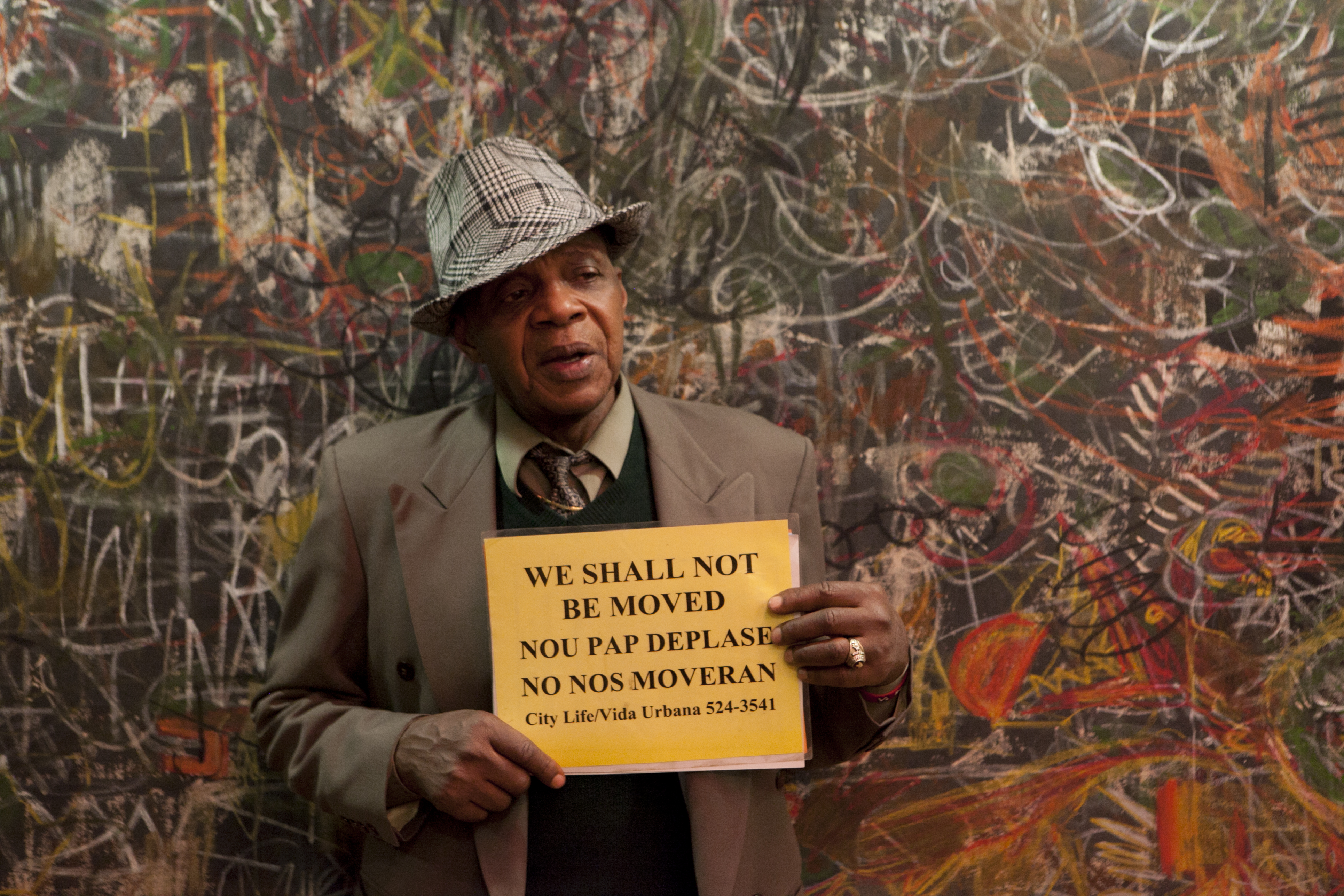
When Jeril Richardson checked out of the hospital after he was hit by a car in 2009, he returned home to find that his landlord had not been keeping up with mortgage payments and the bank was foreclosing on his Hyde Park home.

Canvassers knocking on his door told him about City Life Vida Urbana, a community organization that would help him to fight to stay in his home. Nearly three years later, Richardson still lives in the house, pays rent to the bank, and is saving to purchase the property.

Every weekend, students and community volunteers from Project No One Leaves hit the streets in an effort to reach tenants and homeowners facing foreclosure to inform them of their rights during and after the foreclosure.

“We try to get there before eviction agents come knocking and telling them to leave immediately,” said Chris Larson, senior at Tufts University who helped to coordinate a chapter of No One Leaves at Tufts.

In recent years, keeping up with new foreclosures has become a daunting task, said Chas Hamilton, a third-year law student and current president of the board for Project No One Leaves at Harvard Law School. “In a given week, there might be 30 new foreclosures listed in Boston proper.”

Click here to read the full story.