Noelle Swan

Author Archive

Toxic compounds come of age in nation’s schools

In Uncategorized on October 15, 2010 at 10:28 am

Professor Robert Herrick of the Harvard School of Public Health (HSPH) is worried.

“This could be bigger than asbestos and lead issues combined,” he explains. He’s talking about toxic PCBs, which were a major component of building and electrical materials in more than a third of the public buildings, including schools, built between 1950 and 1979, when they were banned by the Environmental Protection Agency.

Today, those materials are nearing the end of their use-life at a time when school budgets are shrinking. The window caulking and lighting fixtures that have sealed in PCBs for 30+ years are breaking down and releasing the toxic compounds into the air where they settle on ceiling tiles, cinderblock walls, even furniture.

Herrick first published evidence of PCBs in public buildings back in 2006 during a preliminary survey of Boston masonry. This year, his suspicions are becoming a reality. Estabrook Elementary School in Lexington, Massachusetts briefly closed its doors to incoming students early this September in order to heavily ventilate the building and bring PCB concentrations in the air back down to a safe level. Just weeks later, Murphy Elementary School in Dorchester, Massachusetts, closed a wing of the school and brought in workers dressed in full-body protective suits to remove caulk with high levels of PCBs.

A pilot program testing for PCBs in New York City schools found unhealthy levels in at least three of the five schools tested. The city is waiting for the results of two more schools that participated in the pilot test before expanding testing citywide. Parents and politicians in Manhattan are demanding that city officials have all 740 New York City schools tested, but according to the EPA and the Toxic Substance Control Act (TSCA), they don’t have to.

While any PCBs found above a certain concentration must be removed, testing is optional. The New York City Construction Authority has worked to reduce the levels of PCBs in those three schools that have already been tested. So far, follow up tests indicate that these efforts were successful in two out of the three schools. Yet, tests at Public School 199 in Manhattan still reveal concentrations above the maximum set by the EPA.

Professor Charles Weschler saw this happen just last year in Copenhagen, Denmark. Window caulking had been identified as the major source of PCBs in the school. Once the caulk was removed, further testing showed that those PCBs had migrated all over the school. He says that this is a problem around the industrialized world. In fact, Finland, Sweden, and Germany have reported PCBs in their schools.

No one knows for sure how many American schools contain PCBs. Yet, experts from universities across the country believe the conditions that are emerging in the northeast are indicative of a national problem. Without mandatory testing, it is difficult to quantify the scope of the issue. Testing requirements are among several PCB issues currently being considered by the EPA as part of its revision of the TSCA. Herrick and his colleagues have submitted comment to the EPA challenging the federal organization to sponsor mandatory testing and work with states on developing plans to respond to the test results. Others are concerned that this would add undue financial burden to the already stressed national budget.

What are PCBs?

The acronym PCBs stands for polychlorinated biphenyls and represents many different chemicals that share a similar molecular structure. Once considered highly valuable compounds, their number of uses rivaled plastic. They were found in electrical equipment, paints, joint compounds and even carbonless copy paper.

In 1979, the Environmental Protection Agency banned the manufacture of any PCBs, citing them as known carcinogens that disrupt immune, reproductive, neurological, and endocrine systems. PCB contamination is not only a problem indoors, but in rivers, soil, and even outdoor air.


Air fresheners may double breast cancer risk

In Uncategorized on September 6, 2010 at 7:11 pm

Photo Credit: Jim Mills

A new study in the medical journal Environmental Health suggests that major breast cancer risks could be coming home in grocery bags. Researchers from the Silent Spring Institute found little correlation between the use of pesticides, but instead discovered that women using air fresheners and scented cleaning products may be doubling their risk of breast cancer through exposure to mammary gland carcinogens and endocrine disruptors.

“Fragrance so often comes with compounds that are endocrine disruptors, chemicals that effect hormones like estrogen which we know increases your risk factor,” warns Dr. Julia Brody, Silent Spring Institute Director and the study’s corresponding author.

She explains that once in the home, these chemicals enter the body in several ways. “They can come in through skin contact, so you have your hands in the bucket or you’re touching the chemicals. You can breath them so if you are using the product and some of it is in the air you are breathing it. In the case of air fresheners, they are always in the air. And you can also ingest them in dust. So they’re in the air but then they attach to dust particles so you accidentally ingest them.”

This comes as unwelcome news to the busy women of the 21st century who have embraced bottled mountain breezes and lavender fields as sources of comfort and household pride. Air fresheners have become so commonplace that they are no longer found solely in spray bottles but plug into the wall and pervade laundry detergents, fabric softeners, hand soaps and body washes. Dr. Brody suggests choosing simpler cleaning products, such as soap and water or vinegar and baking soda and avoiding fragrances. She hopes that this research helps “to really drive a green chemistry movement in a direction towards safer alternatives.”

Investing in America’s Scientific Future

In Uncategorized on August 31, 2010 at 9:21 am

Brett Collins of Chicago, Illinois is exploring the possibilities of superconducting magnetic coils at the University of Berkeley. Katherine Gabet of Columbus, Ohio studies turbulent combustion at Ohio State University. Andrew Hilmer of Oshkosh, Wisconsin studies nanotechnology at Massachusetts Institute of Technology.

And they’re doing it on the national dime.

These students are among the first 150 recipients of the nation’s Office of Science Graduate Fellowship. Office of Science Director Dr. William F. Brinkman is betting they aren’t the last.

In 2009, Congress passed President Barack Obama’s American Recovery and Revitalization Act, designed to spur economic development. The Act was sold as a jobs bill, but it’s bolder and broader than that. It is an energy revolution.

Through it, fellowship awardees receive tuition support, a stipend for living expenses, and research funding for three years.

Transforming the nation’s energy infrastructure takes more than manual labor. It takes inventors, engineers, scientists, and all forms of tinkerers. That’s where the Office of Science Fellowship comes in to play. These students aren’t ready to shatter any boundaries yet, but the Office of Science is willing to bet that someday some of them will. “We are trying to train future scientists for our National Laboratories,” Dr. Brinkman explains. Congress isn’t so sure.

Some Republicans feel that President Obama has used the economic crisis to drive his personal agendas. Others are looking to jobs and unemployment rates as the only indicators of success of the original plan. All Dr. Brinkman and his colleagues at the Office of Science can do is wait. Their students aren’t going to make any huge discoveries in time for congressional appropriations committee meetings, but that is where the fate of the program is being decided.

President Obama has requested that funding for the Office of Science increase from $4.904 billion in 2010 to $5.121 billion for 2011. In late July, the Senate approved a median figure of $5.012 billion, that’s $109 million shy of the Presidents request, but still $108 million more than last year’s budget. Either would be good news for the fellowship.

Representative Ed Pastor (D) of Arizona introduced the House appropriation recommendations with an impassioned speech citing the BP gulf spill as a wake up call that we need to be forging ahead with our energy revolution. Yet the bill Rep. Pastor has presented to the House of Representatives does not come close to Obama’s or the Senate’s requests for the Office of Science. Instead, the House appropriation bill offers up $4 million dollars less than was allotted in 2010. That could be devastating for the fellowship.

Newton Residents Find that Rainwater Collection Brings More than Financial Savings

In Uncategorized on May 24, 2010 at 12:46 pm
First published in the Newton TAB on May 24, 2010.
Newton —Newton resident Ellen Meyers loves her rain barrel. She doesn’t know for sure how much money it has saved her. That’s not why she purchased it.

“I just felt so good about using less water,” she said.

Many Massachusetts residents are supplementing their water supply with rainwater collected in barrels. Bypassing the tap means bypassing the need for tanker trucks, processing plants, and treatment chemicals. These processes are vital to filter and deliver water for drinking, cooking, and bathing. But water has many other uses.

Maria Rose, an environmental engineer for the city of Newton, said that residents in dry states like Nevada and New Mexico have long considered rainwater collection a critical aspect of daily life. However, the Northeast typically gets 45 inches of rain a year. Rose sees in this figure, an enormous potential for rainwater harvesting.

From just one inch of rainfall, Rose said, a 1000 square foot roof can capture 623 gallons of water– that’s 15 bathtubs full of water falling on a three-car garage. The larger the roof, the more rain can be collected. The soon-to-be-opened Newton North High School will rely on harvested rainwater to maintain the school’s extensive grounds.

Large-scale rainwater collection systems cannot only irrigate large plots of land, but can be brought indoors. Rainwater running off of the roof can be funneled into underground tanks. Water in these tanks can be pumped into the building where it can supply water for flushing toilets and washing laundry.

While such systems are likely to become cost effective over time, they are expensive to install and can require extensive renovations.

Water conservation need not be so high tech, Rose said. Simple solutions can help to save water, no matter where it comes from. Residents can use soaker hoses with lots of little holes allowing water to bubble out slowly instead of sprinklers and that they make sure they aren’t watering sidewalks, driveways, or the side of the house.

Rainwater collection can also be low tech. The industrious homeowner can craft a rain barrel using a couple of power tools, a handful of parts from the hardware store and a large, plastic barrel.

The city of Newton encourages residents to invest in rain barrels and co-sponsors a group-purchasing program each spring with New England Rain Barrel Company of
Peabody, Massachusetts. The barrel itself, a repurposed food storage container, is a blue, 55-gallon, plastic drum with a top and bottom spigot. The bottom spigot attaches to a garden hose and the top spigot remains open releasing overflow. The system is entirely powered by gravity as rainwater rides down the gutter, into the drum, and flows out the hose.
For homeowners who prefer something to match their patio décor, online options range in price from $75 to $300 and range in style from the unapologetic, plastic drum to the Canadian, spruce cabinet.

Any of these systems requires a certain level of maintenance. Screens and lids keep out some debris and insects. Because it is a tank of standing water, the barrel is an ideal habitat for mosquitoes and bacteria. The New England Rain Barrel Company recommends shading the barrel from direct sunlight and rinsing it out when the water gets low to help reduce algae growth. Application of oil or commercially available “mosquito dunks” can keep the surface waters from turning into a mosquito nursery.

David Gordon of Newton Centre has found that this occasional maintenance is minimal and worth the effort. Water conservation is an important issue to him, both personally and professionally in his organic lawn care business. He says the switch from the tap to rain barrels felt like a reasonable step in the right direction.

“It’s not like I thought it would save the world or anything. It just seemed like the right thing to do,” he said.

EEA takes Massachusetts pulse on climate policy

In Uncategorized on May 16, 2010 at 9:37 am

Over the past few years, Massachusetts has taken the national lead in developing a “clean energy economy” and tackling climate change. Governor Deval Patrick signed the Global Warming Solutions Act (GWSA) in August of 2008. This act represents a long-term commitment to slash GHG emission to just 80% of the level that has remained steady since 1990. A short-term goal has been established to reduce emissions by 10-25% by 2020. Secretary Ian Bowles of the Executive Office of Energy and Environmental Affairs (EEA) is charged with setting a specific goal within this range by January 1, 2011.

The EEA’s Draft Climate Implementation Plan identifies existing and potential measures that could be taken by the transportation, building, and energy sectors. Existing and anticipated policies include adoption and implementation of various international, federal, and regional standards and regulations. Projection models indicate that these measures alone are likely to result in a 19% GHG emission reduction by 2020. While this is well within the range of 10-25% set by the Global Warming Solutions Act, the EEA has identified several other areas holding potential for emissions reduction.

The question is, how much of a commitment are the people of Massachusetts willing to make?

The EEA will take the pulse of Massachusetts’s residents on this very issue at a series of public hearings scheduled to take place throughout the state next month. Individuals, businesses, landlords, and large companies alike are all invited to weigh-in at one of these hearings or through written comments.

EEA Assistant Secretary for Policy, David Cash described these upcoming public hearings as “hugely important.” His office is casting a wide net amongst potential stakeholders, reaching out to environmental groups, business groups and local municipal groups. Still, he says it’s hard to gauge who will show up.

The EEA is specifically looking for public comment on 5 questions outlined in the Draft Climate Implementation Plan.

1. Where between 18 and 25 percent below 1990 levels should the emissions limit of 2020 be set and why?

2. What role can Massachusetts state government play in catalyzing the clean energy economy? What policies could inspire entrepreneurship and create markets for clean energy products and services?

3. Over what number of years should cost effectiveness of strategies be evaluated in pursuit of the goals of the Commonwealth for 2020 and 2050? How should future costs be compared to present costs?

4. How should the Commonwealth evaluate and prioritize strategies to achieve 2020 and 2050 goals?

5. How should green house gas reduction strategies be valued or prioritized?

Individual hearings will be held in Boston, Pittsfield, Worcester, Lowell, Lakeville, Springfield, and Woods Hole between June 1 and June 22. Additional comments can be submitted via email at climate.strategies@state.ma.us.

Is Fracking Just a Dirty Word?

In Uncategorized on February 4, 2010 at 12:00 pm

With cap and trade initiatives temporarily sidelined in Washington, the dialogue has changed from emissions reduction to energy independence and job creation. Without missing a beat, the Chairman and CEO, Rex Tillerson, of Exxon Mobil appeared before the House Subcommittee on Energy and Environment on January 20, 2001, presenting hydraulic fracturing as the key to both.

Hydraulic fracturing, or fracking, is a process for extracting oil and natural gas from beneath shale by injecting fracking fluid, (water mixed with small amounts of chemicals), at very high pressures into the ground, forcing out fuel. The technology has been around for a century and has been used in Exxon Mobil oil wells for 60 years. Today, 90% of the nation’s oil and natural gas wells already employ this technology.

Why then, is Tillerson campaigning for an already thriving technology?

Tillerson is trying to paint an image of fracking as a technology that helps us achieve energy independence while creating jobs, ensuring fossil fuels keep the lead role in America’s evolving energy paradigm.

This image is more important today than it ever has been in it’s 100 year history.

For the past year, fracking has been under attack.

NPR reported last May that Texas, Ohio and Colorado residents claim that fracking has polluted their wells. These accusations have yet to be confirmed. It is difficult to analyze any link between contamination of well water and fracking fluid because the chemical compounds utilized are carefully guarded industry secrets.

In 2005, fracking was granted an exemption from the Safe Drinking Water Act taking regulation out of the hands of the Environmental Protection Agency. Vice Chair of the Committee on Energy and Commerce, and Colorado Representative Diana DeGette has introduced a bill in the House that would repeal this exemption. Senator Bob Casey of Pennsylvania has introduced a comparable bill in the Senate.

While the passage of DeGette and Casey’s bills would be a victory for the Obama administration’s expressed desire to reverse the policies of the Bush-era EPA, it may not be crucial to the fracking fluid disclosure cause. In the absence of federal regulation, individual states have begun to request disclosure of fracking fluid contents.

Gas executives from Chesapeake Energy and Range Resources have joined the call for disclosure. This stance is an interesting power play. In addition to continuing the heavy role of fossil fuels in America’s future energy paradigm, this also places reform out of the hands and budgets of energy suppliers.

Fracking is performed by independent contractors, including ther firm Americans love to hate, Halliburton. It is these contractors that hold the recipes to fracking fluid. Aubrey McClendon of Chesapeake Energy can publicly declare, “we need to disclose the chemicals that we are using and search for alternatives,” because it is not his company that will bear the cost of such endeavors.

Environmentalists, worry that any disclosure initiated by the industry might be insufficient and hold out hope that Congress will move to bring the process back under federal regulation.

Sources:

http://degette.house.gov/index.php?option=com_content&view=article&id=852:gas-execs-call-for-disclosure-of-chemicals-used-in-hydraulic-fracturing&catid=66:in-the-news&Itemid=195

http://www.newsweek.com/id/154394

http://www.npr.org/templates/story/story.php?storyId=104565793

http://www.ordons.com/201001242478/exxon-mobils-tillerson-advocates-for-fracking.html

Taking the Guilt Out of Air Travel

In Uncategorized on January 28, 2010 at 5:29 pm

Americans work hard for their vacations. U.S. businesses are notoriously stingy with vacation time and their employees like to make the most of what time they can get.

While a trip to a foreign country for Europeans can be a quick drive over a border or two, Americans travel farther and rely more heavily on air travel. Those flights that carry us across oceans and language barriers leave behind a wake of carbon dioxide in the stratosphere.

I will not be boarding a plane for spring break this year, so rather than stew in jealousy, I thought I would take a peek at my friends itineraries to get an idea of the impact of various spring breaker destinations.

The UC Berkeley Environment and Sustainability Portal estimates that an escape from snowy Boston to sunny Jamaica deposits 1.23 tonnes of CO2 in the atmosphere over the course of the 5000 mile round trip. Berkeley further suggests that a modest donation of $13.39 each to the UC Berekeley Climate Action Fund will sufficiently offset the emissions of their trip. CO2 Balance suggests a $22.04 donation to send energy efficient stoves to the developing world.

A trip from Boston to Cancun, Mexico yields similar CO2 emissions as the Boston to Jamaica trip. A vacation to Hawaii, the most distant sun seeker destination, results in more than twice the CO2 emission at 3.2 tonnes per seat and surpasses even transatlantic flights.

Whether or not these calculators are accurate is debatable and much discussion board space has been devoted to their critique. Their principle, however, is highly intriguing. Environmentally conscious businesses have been purchasing offsets to their travel for several years now. These web based calculators and small scale offsets have brought an easy and affordable way for the individual travelers to compensate in a small way for the massive fossil fuel use included in their ticket price.

Sources:
“Air Travel Calculator.” UC Berkeley Environment and Sustainability Portal.
http://enviro.berkeley.edu/aircalculator. Last accessed January 21, 2010.

“Air Travel Carbon Dioxide Emission Calculator.” CO2balance.com.
http://www.co2balance.com/us/co2calculators/air-travel. Last accessed January 21, 2010.

Lizards of a Different Color

In Uncategorized on January 21, 2010 at 8:10 pm

White Sands of New Mexico- Photo Credit: Erica Bree Rosenblum

This is a tale of three separate species of lizard in New Mexico, Sceloporous undulatus known under the common name of Eastern Fence Lizard, Aspidoscelis inornata or Little Striped Whiptail and Holbrookia maculata a.k.a. Lesser Earless Lizard.

Each of these three species can be found in a variety of habitats in the American Southwest. Those residing in the White Sands formation of New Mexico’s Chihuahua Desert have evolved to be much lighter in color. Such an evolutionary trick of camouflage is not so unusual. Yet, Erica Bree Rosenblum of the University of Idaho and her fellow researchers have seen this convergent evolution as an opportunity to glimpse the processes driving evolution.

As Bree explains in her paper for the Proceedings of the National Academy of Sciences, “all three mutations occur in transmembrane (TM) regions.” Yet, these TM mutations are not equal. Once this was discovered, it seemed likely that they would have achieved this genetic mutation through the same molecular mechanisms. Surprisingly, data revealed that the three species used completely different processes to achieve the same genetic change.

Aside from insects and bacteria, in terms of evolutionary timescales, genetic mutations occur over 100,000’s if not millions of years. The gypsum dunes only began formation less than 6,000 years ago, meaning that these lizards had to evolve within this relatively short time span. At this rate, Rosenblum expects that the pale versions of these three species are not far away from becoming their own species.

Credit: Erica Bree Rosenblum

Sources:
Fountain, Henry. “White Lizards Evolve in New Mexico Dunes.” New York Times. New York Times, New York. (January 4, 2010). Accessed online at http://www.nytimes.com/2010/01/05/science/05oblizard.html.

Rosenblum, Erica Bree et. al. “Molecular and functional basis of phenotypic convergence in white lizards at White Sands.” Proceedings of the National Academy of Sciences. University of Texas, Austin. (November 23, 2009).

Considering Cruises

In Uncategorized on January 3, 2010 at 10:33 pm

As students and families all across the nation scan vacation promotions for deals on spring break vacations, Friends of the Earth (FOE) turns a scrutinizing eye to the popular cruise ship option.

Dr. Ross A Klein, PhD released a 36 page report prepared for FOE on the topic, Getting a Grip on Cruise Ship Pollution, in early December, 2009. According to Klein’s report, pollution from cruise ships surpasses even airfare by threefold. Cruise-liner waste is discharged into the environment in two streams; water pollution and air pollution. Wastewater produced on these ships comes in the forms of blackwater, sewer sludge, gray water, solid waste, hazardous waste, oily bilge water and ballast water.

In addition to the obvious environmental problems derived from the release of waste and waste water into the oceans, ballast waters can also have devastating effects on local ecosystems. Ballast water is ocean water that is stored on-board a ship within reservoir tanks in order to control buoyancy. Water is taken on to offset the passengers and cargo at one port and discharged at another as passengers disembark.

Ballasts can hold upwards of 50 million gallons of water and can carry millions of hitchhikers to foreign ports. Organisms from fish and seastars to crabs and sea jellies can be displaced thousands of miles away. Josephine Hearn’s Stowaway Species Interactive tells the tale of the mitten crab, native to China’ Yellow Sea finding its way to the Thames, San Francisco Bay and Baltimore Harbor. The Round Goby fish of the Black and Caspian Seas settled in the American Great Lakes. Japan’s yellow and purple seastar managed to colonize Tasmania Port Hobart in densities up to 1100 individuals per cubic meter.

These invading species can be devastating to an ecosystem. Each ecosystem depends on a predator prey balance. Non-native species have no native predators and can therefor multiply in numbers that their native counterparts cannot match. Very quickly, these non-native species can out compete other native species for space and resources. Removing these species is a costly and often futile endeavor. Hearn reports that while divers were able to remove 21,000 seastars from Port Hobart, the remaining population quickly recouped their previous densities.

It is from its air pollution that the cruise ship wins the award of largest polluting mode of transport. Klein points out the majority of cruise ships run on bunker fuel. Bunker fuel is composed of residual components of refined crude oil. It is diluted but its sulfur content is 2,000 times that of diesel fuel. Some ships converted to gas engines before gas prices sky rocketed. With the price of gas so high, there is little incentive for this to become a larger trend throughout the industry without international regulations.

Beyond the sulfurous engine emissions, cruise ships incinerate massive volumes of waste, from trash, to oil sludge every day. Klein explains the contents of these incinerator emissions.

“The emissions from onboard incineration and its ash can include furans and dioxins, both found to be carcinogenic, as well as nitrogen oxide, sulfur oxide, carbon monoxide, carbon dioxide, particulate matter, hydrogen chloride, toxic and heavy metals such as lead, cadmium and mercury, and hydrocarbons” (p 9).

California attempted to implement a ban on incineration within 27 miles of the shore, they eventually settled for three.

Alaska has had some success with wastewater and air emissions standard enforcement through regulation and the use of on-board observers, this is hardly the fun and sun spring breakers seek.

Other coastal US destinations certainly could follow California and Alaska’s lead and implement similar standards. Some of the most popular cruise destinations lie outside the jurisdiction and wealth of the US. Jamaica, Antigua the other islands of the Caribbean, depend on tourist dollars. Even if they were willing to take the risk of pushing cruise business away by implementing emissions standards, they would be unable to fund any regulation of such standards.

Further allegations have been slung across the blogiverse against the cruise industry citing poor working conditions for crew members and lax security. If you were thinking of cruising down to the islands this spring, you just might want to reconsider.

Note: Future posts will include articles on vacation options and their environmental impacts. Drop a comment if you have any suggestions for vacation ideas you would like to see explored.

Sources:

Hearn, Josephine. “Stowaway Species.” On Earth: Environmental Politics People. Winter2010, Vol. 31 Issue 4, p42-43. http://www.onearth.org/article/stowaway-species. Accessed on January 3, 2009.

Klien, Ross. “Getting a Grip on Cruse Ship Pollution.” Friends of the Earth. Decemer 1, 2009. http://www.foe.org/getting-grip-cruise-ship-pollution. Accessed on December 30, 2009.

“Bunker Fuels.” Liquid Minerals Inc. http://www.liquidminerals.com/fuels.htm Accessed on January 3, 2010.

Tobacco to the Rescue?

In Uncategorized on January 2, 2010 at 2:22 pm

Move over corn, tobacco is poised to take the lead in the biofuel race.

Just a few short years ago, it seemed that ethanol, a biodiesel fuel derived from corn, was going to be the key which freed us from the shackles of fossil fuels.

Yet, the promise of ethanol has since worn thin. Nitrogen-hungry corn requires heavy fertilizer when grown on a large-scale, placing the local water-table at risk. Social justice advocates have cautioned further against using a food source for fuel.

Could tobacco be the answer?

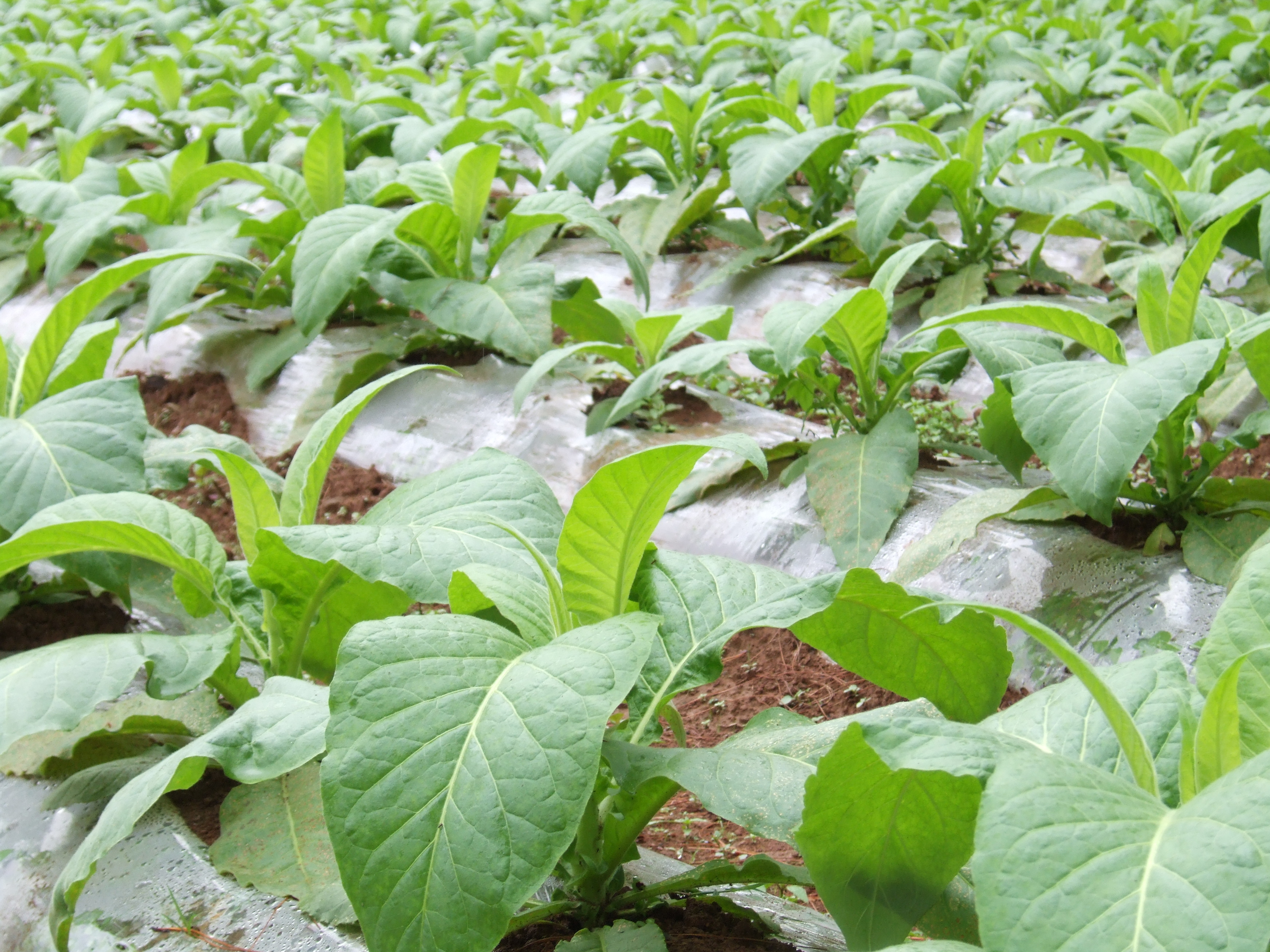
Initially, scientists considered the oil derived from tobacco seeds as a potential fuel source. Seed volume proved to be too low, shifting attention to the leaves. With a little bioengineering, the leaves have become promising oil producers. The researchers at the Biotechnology Foundation Laboratories at Thomas Jefferson University have recently isolated two genes in the tobacco plant DNA that, when over-expressed, increase oil production. Surprisingly, as oil production increased, so did the concentration of fatty acids within the oil. The result is not only more, but more concentrated oil.

While tobacco clearly has promise, it too will have to stand the scrutiny which befell ethanol. Tobacco is considered an expensive plant, though a significant portion of the expense lies in the curing of leaves for smoking tobacco as this involves the burning of large volumes of wood. It is this practice which is often quoted as a major environmental beef with the tobacco companies.

While tobacco is not a food source, there is still a legitimate concern that the crop could end up competing for land with food crops. Tobacco is native to the Americas, yet much is already produced in the developing world. Were tobacco to become an energy commodity, cash poor nations might be tempted to relegate more of their farm land to the latest cash-crop.

While it is an intriguing idea that Big Bad Tobacco could shift its business to the energy sector, it is yet still fantasy.

Sources:

http://agronomyday.cropsci.illinois.edu/2001/tours/nitrogen-need/index.html

Making leaves better for energy

http://www.icis.com/Articles/2007/10/08/9067776/hollywood-celebrities-get-into-biofuels.html

http://www.sciencecodex.com/engineered_tobacco_plants_have_more_potential_as_a_biofuel

Plant Biotechnology Journal (2009) 8, pp. 1–11.