Noelle Swan

Archive for the ‘Uncategorized’ Category

Lizards of a Different Color

In Uncategorized on January 21, 2010 at 8:10 pm

White Sands of New Mexico- Photo Credit: Erica Bree Rosenblum

This is a tale of three separate species of lizard in New Mexico, Sceloporous undulatus known under the common name of Eastern Fence Lizard, Aspidoscelis inornata or Little Striped Whiptail and Holbrookia maculata a.k.a. Lesser Earless Lizard.

Each of these three species can be found in a variety of habitats in the American Southwest. Those residing in the White Sands formation of New Mexico’s Chihuahua Desert have evolved to be much lighter in color. Such an evolutionary trick of camouflage is not so unusual. Yet, Erica Bree Rosenblum of the University of Idaho and her fellow researchers have seen this convergent evolution as an opportunity to glimpse the processes driving evolution.

As Bree explains in her paper for the Proceedings of the National Academy of Sciences, “all three mutations occur in transmembrane (TM) regions.” Yet, these TM mutations are not equal. Once this was discovered, it seemed likely that they would have achieved this genetic mutation through the same molecular mechanisms. Surprisingly, data revealed that the three species used completely different processes to achieve the same genetic change.

Aside from insects and bacteria, in terms of evolutionary timescales, genetic mutations occur over 100,000’s if not millions of years. The gypsum dunes only began formation less than 6,000 years ago, meaning that these lizards had to evolve within this relatively short time span. At this rate, Rosenblum expects that the pale versions of these three species are not far away from becoming their own species.

Credit: Erica Bree Rosenblum

Sources:
Fountain, Henry. “White Lizards Evolve in New Mexico Dunes.” New York Times. New York Times, New York. (January 4, 2010). Accessed online at http://www.nytimes.com/2010/01/05/science/05oblizard.html.

Rosenblum, Erica Bree et. al. “Molecular and functional basis of phenotypic convergence in white lizards at White Sands.” Proceedings of the National Academy of Sciences. University of Texas, Austin. (November 23, 2009).

Considering Cruises

In Uncategorized on January 3, 2010 at 10:33 pm

As students and families all across the nation scan vacation promotions for deals on spring break vacations, Friends of the Earth (FOE) turns a scrutinizing eye to the popular cruise ship option.

Dr. Ross A Klein, PhD released a 36 page report prepared for FOE on the topic, Getting a Grip on Cruise Ship Pollution, in early December, 2009. According to Klein’s report, pollution from cruise ships surpasses even airfare by threefold. Cruise-liner waste is discharged into the environment in two streams; water pollution and air pollution. Wastewater produced on these ships comes in the forms of blackwater, sewer sludge, gray water, solid waste, hazardous waste, oily bilge water and ballast water.

In addition to the obvious environmental problems derived from the release of waste and waste water into the oceans, ballast waters can also have devastating effects on local ecosystems. Ballast water is ocean water that is stored on-board a ship within reservoir tanks in order to control buoyancy. Water is taken on to offset the passengers and cargo at one port and discharged at another as passengers disembark.

Ballasts can hold upwards of 50 million gallons of water and can carry millions of hitchhikers to foreign ports. Organisms from fish and seastars to crabs and sea jellies can be displaced thousands of miles away. Josephine Hearn’s Stowaway Species Interactive tells the tale of the mitten crab, native to China’ Yellow Sea finding its way to the Thames, San Francisco Bay and Baltimore Harbor. The Round Goby fish of the Black and Caspian Seas settled in the American Great Lakes. Japan’s yellow and purple seastar managed to colonize Tasmania Port Hobart in densities up to 1100 individuals per cubic meter.

These invading species can be devastating to an ecosystem. Each ecosystem depends on a predator prey balance. Non-native species have no native predators and can therefor multiply in numbers that their native counterparts cannot match. Very quickly, these non-native species can out compete other native species for space and resources. Removing these species is a costly and often futile endeavor. Hearn reports that while divers were able to remove 21,000 seastars from Port Hobart, the remaining population quickly recouped their previous densities.

It is from its air pollution that the cruise ship wins the award of largest polluting mode of transport. Klein points out the majority of cruise ships run on bunker fuel. Bunker fuel is composed of residual components of refined crude oil. It is diluted but its sulfur content is 2,000 times that of diesel fuel. Some ships converted to gas engines before gas prices sky rocketed. With the price of gas so high, there is little incentive for this to become a larger trend throughout the industry without international regulations.

Beyond the sulfurous engine emissions, cruise ships incinerate massive volumes of waste, from trash, to oil sludge every day. Klein explains the contents of these incinerator emissions.

“The emissions from onboard incineration and its ash can include furans and dioxins, both found to be carcinogenic, as well as nitrogen oxide, sulfur oxide, carbon monoxide, carbon dioxide, particulate matter, hydrogen chloride, toxic and heavy metals such as lead, cadmium and mercury, and hydrocarbons” (p 9).

California attempted to implement a ban on incineration within 27 miles of the shore, they eventually settled for three.

Alaska has had some success with wastewater and air emissions standard enforcement through regulation and the use of on-board observers, this is hardly the fun and sun spring breakers seek.

Other coastal US destinations certainly could follow California and Alaska’s lead and implement similar standards. Some of the most popular cruise destinations lie outside the jurisdiction and wealth of the US. Jamaica, Antigua the other islands of the Caribbean, depend on tourist dollars. Even if they were willing to take the risk of pushing cruise business away by implementing emissions standards, they would be unable to fund any regulation of such standards.

Further allegations have been slung across the blogiverse against the cruise industry citing poor working conditions for crew members and lax security. If you were thinking of cruising down to the islands this spring, you just might want to reconsider.

Note: Future posts will include articles on vacation options and their environmental impacts. Drop a comment if you have any suggestions for vacation ideas you would like to see explored.

Sources:

Hearn, Josephine. “Stowaway Species.” On Earth: Environmental Politics People. Winter2010, Vol. 31 Issue 4, p42-43. http://www.onearth.org/article/stowaway-species. Accessed on January 3, 2009.

Klien, Ross. “Getting a Grip on Cruse Ship Pollution.” Friends of the Earth. Decemer 1, 2009. http://www.foe.org/getting-grip-cruise-ship-pollution. Accessed on December 30, 2009.

“Bunker Fuels.” Liquid Minerals Inc. http://www.liquidminerals.com/fuels.htm Accessed on January 3, 2010.

Tobacco to the Rescue?

In Uncategorized on January 2, 2010 at 2:22 pm

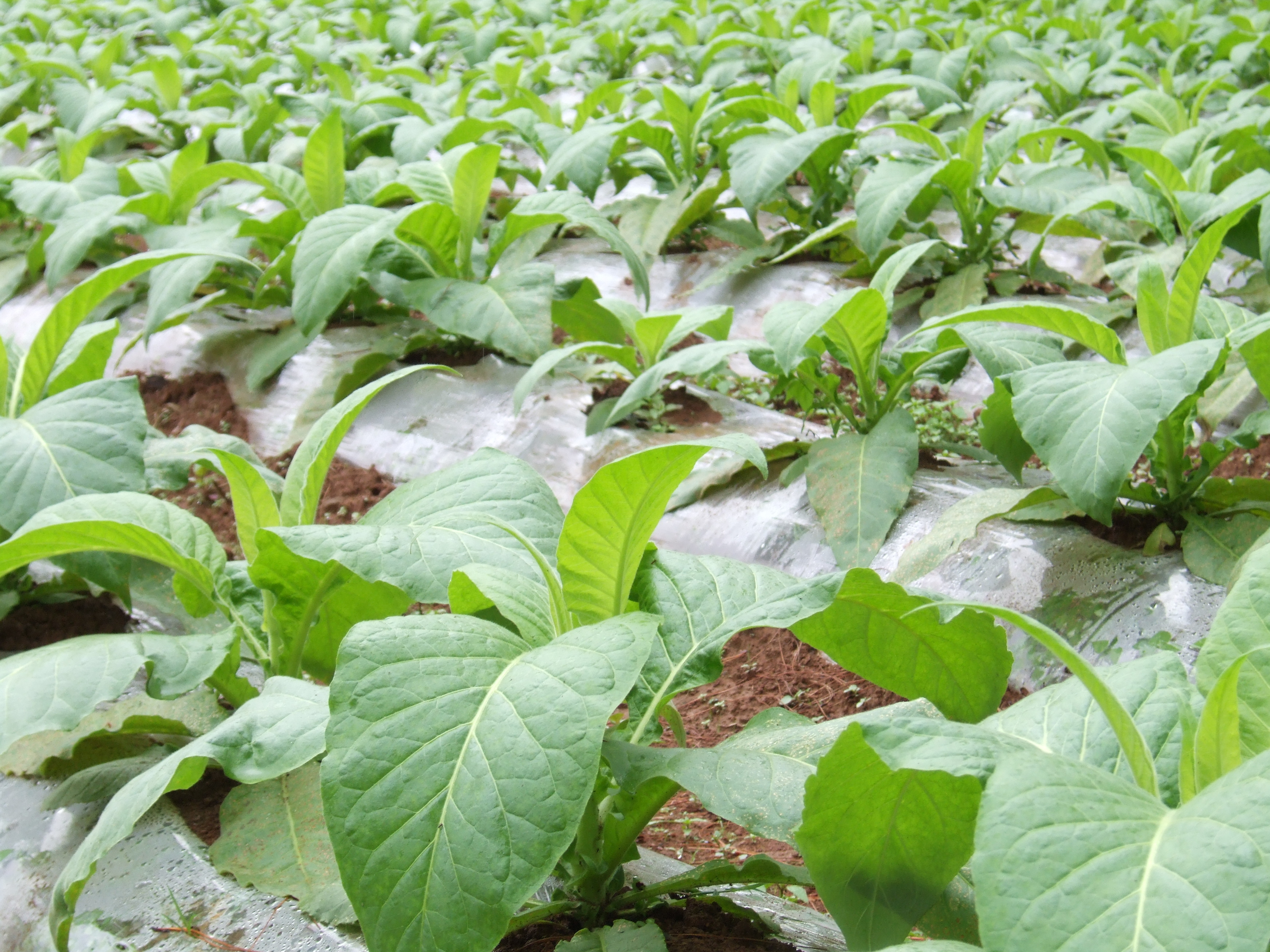
Move over corn, tobacco is poised to take the lead in the biofuel race.

Just a few short years ago, it seemed that ethanol, a biodiesel fuel derived from corn, was going to be the key which freed us from the shackles of fossil fuels.

Yet, the promise of ethanol has since worn thin. Nitrogen-hungry corn requires heavy fertilizer when grown on a large-scale, placing the local water-table at risk. Social justice advocates have cautioned further against using a food source for fuel.

Could tobacco be the answer?

Initially, scientists considered the oil derived from tobacco seeds as a potential fuel source. Seed volume proved to be too low, shifting attention to the leaves. With a little bioengineering, the leaves have become promising oil producers. The researchers at the Biotechnology Foundation Laboratories at Thomas Jefferson University have recently isolated two genes in the tobacco plant DNA that, when over-expressed, increase oil production. Surprisingly, as oil production increased, so did the concentration of fatty acids within the oil. The result is not only more, but more concentrated oil.

While tobacco clearly has promise, it too will have to stand the scrutiny which befell ethanol. Tobacco is considered an expensive plant, though a significant portion of the expense lies in the curing of leaves for smoking tobacco as this involves the burning of large volumes of wood. It is this practice which is often quoted as a major environmental beef with the tobacco companies.

While tobacco is not a food source, there is still a legitimate concern that the crop could end up competing for land with food crops. Tobacco is native to the Americas, yet much is already produced in the developing world. Were tobacco to become an energy commodity, cash poor nations might be tempted to relegate more of their farm land to the latest cash-crop.

While it is an intriguing idea that Big Bad Tobacco could shift its business to the energy sector, it is yet still fantasy.

Sources:

http://agronomyday.cropsci.illinois.edu/2001/tours/nitrogen-need/index.html

Making leaves better for energy

http://www.icis.com/Articles/2007/10/08/9067776/hollywood-celebrities-get-into-biofuels.html

http://www.sciencecodex.com/engineered_tobacco_plants_have_more_potential_as_a_biofuel

Plant Biotechnology Journal (2009) 8, pp. 1–11.

Save Our Cities

In Uncategorized on December 29, 2009 at 4:55 pm

The San Francisco Bay area prides itself on its aggressive implementation of environmental policies. Surprisingly, David Weintraub reports in his December 26, 2009 NYT article Air Quality Guidelines Face Unexpected Critics that some Bay area environmentalists are opposing caps on green house gas emissions. As the region’s air quality regulators propose new guidelines, these environmentalists have become wary that increased regulations will drive builders to outlying areas, contributing to urban sprawl. While this specific issue is based on local zoning laws and loopholes, there is a discussion that is applicable to every metropolitan area.

We need development within our cities. People who live in cities put fewer miles on their cars. Heat that is lost through endless rows of suburban roofs rises up heating apartment after apartment in cities. Suburban supermarkets stock a large selection of perishables, resulting in a high throw away rate. For all of their faults, cities are places of efficiency.

Air pollution is a very real concern today for the majority of America’s cities. City Mayors.com cites an American Lung Association report, “Six out of ten Americans live in urban areas where air pollution can cause major health problems.” Statistics like this are evidence that while want to avoid pushing developers out of the cities, we need to prevent them from further contributing to the poor health of the city.

So the quandary of the century is, how can we motivate developers to invest in cities despite the rising costs of meeting new standards?

The Leadership in Energy and Environmental Design (LEED) certification has brought recognition to the table as well a set of measurement standards. Those developers of LEED buildings wear their certification as a badge of honor. Yet, so far, this designation means little to the majority of the population. It is only when lessees begin seeking out LEED certification on a large-scale that developers will feel the pressure to pursue certification.

What is called for is an aggressive public relations campaign bringing the term LEED to dinner tables and water coolers near you.

Sources:

http://www.citymayors.com/environment/polluted_uscities.html

http://www.nytimes.com/2009/12/27/us/27sfpolitics.html?_r=1

http://www.usgbc.org

To Swordfish or Not To Swordfish

In Uncategorized on December 28, 2009 at 6:38 pm

Perusing the menu at Pomodoro’s in Brookline Village, my eyes locked on “Grilled Atlantic swordfish on Sardinian couscous risotto.” My lips met in the beginnings of an “Mmmmmm,” just as my stepmother chimed in “does anybody know if swordfish is still a faux-pas?”

“I thought I heard that wasn’t true anymore,” I replied in preemptive defense. She gave me one of those skeptical looks that parents reserve for their children and proceeded to order the zucchini flowers instead.

Feeling a bit guilty, I realized that I had no idea what the status of the swordfish population really was. Sure, “I thought I’d heard” but I also “thought I’d heard” that green M&Ms were an aphrodisiac and pop rocks and coke killed Little Mikey. I decided it was time to try out this environmental journalism thing and get the skinny on swordfish.

In the 1980s, the “Give the Swordfish a Break” campaign popularized the plight of the dwindling North Atlantic swordfish. This campaign successfully coordinated boycotts of restaurants serving swordfish in the northeast resulting in what the National Marine Fisheries Service describes as “recovery that has surpassed expectation.”

Despite the rebound of the swordfish population, the discerning diner must ask one critical question before ordering, “how was the swordfish caught?” If the answer is through longline fishing, then it’s time to find something else on the menu.

Longline fishing is a method of increasing yields of large fish such as swordfish and tuna. This method utilizes mainlines tens of miles long. At varying intervals, a line dangles down bearing hand-baited hooks every few feet. These lines bring in a tremendous harvest of fish, but also of sea birds, sea turtles, marine mammals, sharks and other less desirable fish that are discarded as incidental waste.

If instead, you hear harpoon or handline, you know that this fish was caught with sustainable and responsible fishing methods. If specific fishing methods are unavailable, the chef should at least be able to tell you where it was caught. The Monterrey Bay Aquarium’s Seafood WATCH considers all domestically caught swordfish acceptable. It is highly recommended that you avoid imported swordfish.

If your server simply gives you a blank stare, I’d move on.

Sources:

http://www.montereybayaquarium.org/cr/seafoodwatch.aspx

http://www.nmfs.noaa.gov/speciesid/fish_page/fish46a.html